I2C internal (HW API)
Description
This example demonstrates communication with the internal 24LC64 EEPROM memory on the Red Pitaya using the I2C protocol. The code below writes a message to a given address inside the EEPROM and read the message from the EEPROM. While the previous example uses the C++ API commands, this example uses the ioctl and other functions accessible directly from C code.
Required hardware
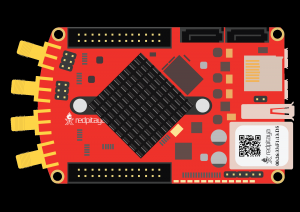
Red Pitaya
Required software
2.00-23 or higher OS
Note
This code is written for 2.00-23 or higher OS. For older OS versions, please check when specific commands were released (a note is added to each command introduced in 2.00 or higher verisons).
API Code Examples
Note
The API code examples don’t require the use of the SCPI server. Instead, the code should be compiled and executed on the Red Pitaya itself (inside Linux OS). Instructions on how to compile the code and other useful information are here.
Code - C
/* @brief This is a simple application for testing I2C communication on a RedPitaya
* @Author Luka Golinar <luka.golinar@redpitaya.com>
*
* (c) Red Pitaya  http://www.redpitaya.com
*
* This part of code is written in C programming language.
* Please visit http://en.wikipedia.org/wiki/C_(programming_language)
* for more details on the language used herein.
*/


#include <fcntl.h>
#include <stdio.h>
#include <stdlib.h>
#include <linux/ioctl.h>
#include <sys/ioctl.h>
#include <linux/i2c-dev.h>
#include <string.h>
#include <unistd.h>
#include <errno.h>
#include <stdint.h>


#define I2C_SLAVE_FORCE          0x0706
#define I2C_SLAVE                0x0703    /* Change slave address          */
#define I2C_FUNCS                0x0705    /* Get the adapter functionality */
#define I2C_RDWR                 0x0707    /* Combined R/W transfer (one stop only)*/

#define EEPROM_ADDR              0x50

/*
* Page size of the EEPROM. This depends on the type of the EEPROM available
* on board.
*/
#define PAGESIZE                 32
/* eeprom size on a redpitaya */
#define EEPROMSIZE               64*1024/8


/* Inline functions definition */
static int iic_read(char *buffer, int offset, int size);
static int iic_write(char *data, int offset, int size);

/*
* File descriptors
*/
int fd;

int main(int argc, char *argv[])
{
    int status;

    /* Read buffer to hold the data */
    char *buffer = (char *)malloc(EEPROMSIZE * sizeof(char));

    char data[] = "THIS IS A TEST MESSAGE FOR THE I2C PROTOCOL COMMUNICATION WITH A EEPROM. IT WAS WRITTEN FOR A REDPITAYA MEASURMENT TOOL.";
    size_t size = strlen(data);

    /* Sample offset inside an eeprom */
    int offset = 0x100;

    /* Open the device. */
    fd = open("/dev/i2c-0", O_RDWR);

    if(fd < 0){
        printf("Cannot open the IIC device\n");
        return 1;
    }

    status = ioctl(fd, I2C_SLAVE_FORCE, EEPROM_ADDR);
    if(status < 0){
        printf("Unable to set the EEPROM address\n");
        return -1;
    }

    /* Write to redpitaya eeprom - change write/read pointer*/
    status = iic_write((char *)data, offset, size);
    if(status){
        fprintf(stderr, "Cannot Write to EEPROM\n");
        close(fd);
        return -1;
    }

    /* Read from redpitaya eeprom */
    status = iic_read(buffer, EEPROM_ADDR, EEPROMSIZE);
    if (status){
        printf("Cannot Read from EEPROM \n");
        close(fd);
        return 1;
    }

    printf("eerprom test successfull.\n");

    /* Release allocations */
    close(fd);
    free(buffer);

    return 0;
}

/* Read the data from the EEPROM.
*
*  @param    read buffer -- input buffer for data storage
*  @param    off set     -- eeprom memory space offset
*  @param    size        -- size of read data
*  @return   iicRead status
*
*  @note     None. */

static int iic_read(char *buffer, int offset, int size)
{
    ssize_t bytes_written;
    ssize_t bytes_read;
    uint8_t write_buffer[2];

    /*
    * Load the offset address inside EEPROM where data need to be written.
    * Supported for BigEndian and LittleEndian CPU's
    */
    write_buffer[0] = (uint8_t)(offset >> 8);
    write_buffer[1] = (uint8_t)(offset);

    /* Write the bytes onto the bus */
    bytes_written = write(fd, write_buffer, 2);
    if(bytes_written < 0){
        fprintf(stderr, "EEPROM write address error.\n");
        return -1;
    }

    /* Read the bytes. */
    printf ("Performing Read operation.\n");

    /* Read bytes from the bus */
    bytes_read = read(fd, buffer, size);
    if(bytes_read < 0){
        fprintf(stderr, "EEPROM read error.\n");
        return -1;
    }

    printf("Read EEPROM Succesful\n");

    return 0;
}


static int iic_write(char *data, int offset, int size){

    /* variable declaration */
    int bytes_written;
    int write_bytes;
    int index;

    /* Check for limits */
    if(size > PAGESIZE){
        write_bytes = PAGESIZE;
    }
    else{
        write_bytes = size;
    }

    /* Number of needed loops to send all the data.
    * Limit data size per transmission is PAGESIZE */
    int loop = 0;

    while(size > 0){

        /* buffer size is PAGESIZE per transmission */
        uint8_t write_buffer[32 + 2];

        /*
        * Load the offset address inside EEPROM where data need to be written.
        * Supported for BigEndian and LittleEndian CPU's
        */
        write_buffer[0] = (uint8_t)(offset >> 8);
        write_buffer[1] = (uint8_t)(offset);

        for(index = 0; index < PAGESIZE; index++){
            write_buffer[index + 2] = data[index + (PAGESIZE * loop)];
        }

        /* Write the bytes onto the bus */
        bytes_written = write(fd, write_buffer, write_bytes + 2);
        /* Wait till the EEPROM internally completes the write cycle */
        sleep(2);

        if(bytes_written != write_bytes+2){
            fprintf(stderr, "Failed to write to EEPROM\n");
            return -1;
        }

        /* written bytes minus the offset addres of two */
        size -= bytes_written - 2;
        /* Increment offset */
        offset += PAGESIZE;

        /* Check for limits for the new message */
        if(size > PAGESIZE){
            write_bytes = PAGESIZE;
        }
        else{
            write_bytes = size;
        }
        loop++;
    }

    printf("\nWrite EEPROM Succesful\n");
    return 0;
}